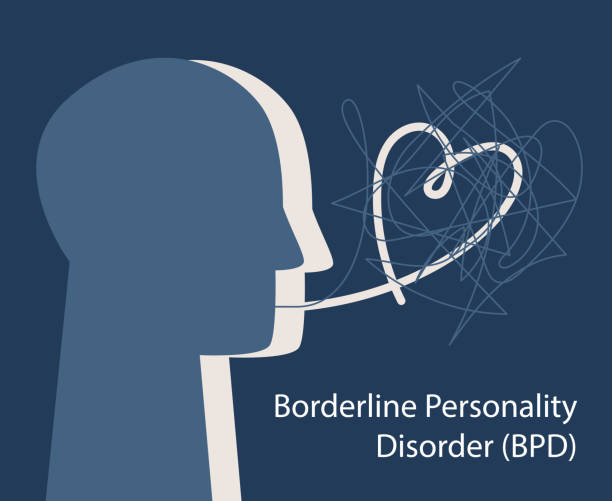
Have you ever found yourself in a quiet room, perhaps reading a book or a video, when seemingly out of the blue, a dreadful thought explodes into your mind? Could it perhaps have something to do with something terrible occurring, perhaps something to do with your health, or perhaps something to do with a very different “dark” image that does not reflect you in any way?
“If this is something that has happened to you, the most important thing for you to understand is the following:
You are not alone, and you are not your thoughts. ”
“Anxiety and intrusive thoughts are topics that are so universal in the human experience but are the very things that are talked about the least because people are ashamed and sometimes even terrified by these experiences. This guidebook will help with understanding what is going on in your head and why and how to go back to being calm and collected.”
– Nigel Hamilton
Part 1: What is Anxiety, Really?
We often use the word “anxious” to mean we are nervous about a job interview or a first date. But chronic anxiety is more than just “nerves.” It is a biological response that lives in your body and your brain.
The Survival Brain (The Smoke Alarm)
In order to grasp the concept of anxiousness, we have to refer to our ancestors. Thousands of years ago, man existed in a world filled with physical danger, such as predators. In a bid to survive, our brains designed what I call an “Early Warning System,” known as the “Amygdala.”
The Amygdala is like a smoke detector. It sends a signal to your body to release a “fight or flight” response if it perceives danger. This is how your heart beats fast in order to supply your muscles with blood in case you need to flee or defend yourself, or how your breathing becomes shallow in an attempt to intake as much oxygen as possible.
The Problem: We do not have to deal with tigers in the real world. Yet our “smoke alarm” is always with us. At times, it becomes extra sensitive. It goes off with a reaction to an annoying email message, a crowded room, or even a fearful thought. It can’t distinguish between a fire and burning a slice of toast.
“When your smoke alarm goes off at the wrong time, that is what we call Anxiety.”
Symptoms of Anxiety
Anxiety doesn’t just stay in your head. It affects your whole body. Common signs include:
- Physical: Racing heart, sweating, shaking, “butterflies” in the stomach, muscle tension, or feeling lightheaded.
- Mental: Constant worrying, a sense of “impending doom,” or feeling like you can’t focus on anything else.
Part 2: Understanding Intrusive Thoughts
Intrusive thoughts refer to the “sticky,” unwanted, and often disturbing thoughts that jump into your mind unexpectedly. Think of them as uninvited guests attending a party. You did not invite them, and they need to leave, but they just kind of start shouting the more that you try to shoo them out.
Common Examples of Intrusive Thoughts
These thoughts can take many forms, and they often target the things you care about most. They might sound like:
- Safety Fears: “What if I accidentally left the stove on and the house burns down?”
- Social Fears: “Did I just say something incredibly stupid? Does everyone secretly hate me?”
- “What If” Scenarios: “What if I lose my job tomorrow?”
- Taboo Thoughts: Violent or “weird” images that pop up, making you wonder, “Why would I think that? Am I a bad person?”
The “Bad Person” Myth
The most important thing to keep in mind here is that: “An intrusive thought is not a reflection of your character.”
In fact, researchers have discovered that the contents of intrusive thoughts are usually the reverse of what you wish to do. If you are a very kind individual, the intrusive thought could be about behaving mean. Since the idea is just “very gross” or “very wrong” to you, your mind freaks out and puts lots of focus on the thought.
The simple fact that the idea troubles you shows that you do not support the idea.
Part 3: The Cycle of Anxiety and Thoughts
Why do these thoughts stay stuck? It’s because of a cycle.
- The Trigger: A random thought pops into your head (e.g., “What if I get sick?”).
- The Judgment: You react with fear. You think, “Why did I think that? This is a sign of something terrible!”
- The Anxiety Spike: Because you are scared, your “smoke alarm” (the Amygdala) goes off. Your body floods with stress chemicals.
- The Search for Safety: You try to “fix” the thought. You check your body for symptoms, you ask for reassurance, or you try to force the thought out of your head.
- The Reinforcement: By fighting the thought, you tell your brain, “This thought is dangerous!” This makes the brain more likely to bring the thought up again to “warn” you.
This is how a tiny spark becomes a wildfire. The more we fight the thought, the “stickier” it becomes.
Part 4: How to Manage Anxiety and Intrusive Thoughts
If you are struggling right now, there are proven ways to turn down the volume on your anxiety. Here is a step-by-step approach to handling these moments.
1. Label the Thought
When a scary thought pops up, don’t try to argue with it. Instead, name it. Tell yourself: “Oh, look, that’s an intrusive thought. That’s just my anxiety talking.”
By labeling it, you create a small distance between “You” and the “Thought.” You are the observer; the thought is just a passing cloud.
2. Practice “Allowing” (The Pink Elephant Rule)
“If I say, ‘Whatever you do, do NOT think about a pink elephant,’ what do you think of first? The answer, of course, is the pink elephant.”
This also applies to anxiety. If you attempt to repel a thought, it will only strengthen it. Rather, attempt to allow that thought to simply sit there in your mind. Do not resist it, yet also don’t accept it. This can be best accomplished by allowing it to run in your mind like static on a radio playing in the background. You only have to deal with it when it’s playing in your background.
3. Ground Your Body
Since anxiety is physical, you need to tell your body it is safe. A popular method is the 5-4-3-2-1 Technique:
- Acknowledge 5 things you can see.
- Acknowledge 4 things you can touch.
- Acknowledge 3 things you can hear.
- Acknowledge 2 things you can smell.
- Acknowledge 1 thing you can taste.
This pulls your brain out of the “future” (where the worries are) and back into the “present” (where you are physically safe).
4. Change Your Relationship with Uncertainty
Anxiety hates not knowing. It wants 100% certainty that everything will be okay. But life doesn’t offer 100% certainty.
Part of healing is learning to say, “I don’t know what will happen, and that’s okay. I can handle it if things get tough.” This is called building Distress Tolerance.
Part 5: When to Seek Professional Help
While everyone experiences anxiety, you don’t have to suffer alone if it feels overwhelming. If your thoughts are keeping you from sleeping, eating, or enjoying your life, it might be time to talk to a professional.
There are two main types of therapy that work incredibly well for anxiety and intrusive thoughts:
- CBT (Cognitive Behavioral Therapy): This helps you identify the patterns in your thinking and slowly change how you react to them.
- ERP (Exposure and Response Prevention): This is the “gold standard” for intrusive thoughts. It involves slowly getting used to the things that scare you in a safe environment until they no longer trigger a panic response.
A Note on Medication: Not to mention that sometimes the “smoke alarm” inside your brain is simply too loud to be calmed by therapy right away. In such a situation, medication may be recommended to assist with turning down the volume on the anxiety so that you may focus on healing. There is no shame in leveraging something to assist your brain in achieving its harmony.
Part 6: A Message of Hope
Living with anxiety and intrusive thoughts can feel exhausting. It feels like a constant battle with one’s mind. But let’s not forget: brains are plastic. That means they can change.
We can retrain our brains through practice, patience, and self-compassion to realize these thoughts are not threats. We can learn to hear the “smoke alarm” and say, “Thanks for looking out for me, but there’s no fire here,” and then go back to our day.
You are more than anxiety, more than thoughts. You’re simply a very human person with a big challenge; with the right tools, you shall find your way back into a place of stillness.
Keep Moving Forward
If there is one thing that you should take away from all of this, it is this: The think is not the action. The fact that you think about something does not mean that it is going to occur, or that you even want it to.
Be kind to yourself today. You’re doing the best you can with a brain that’s just working a little too hard to protect you.