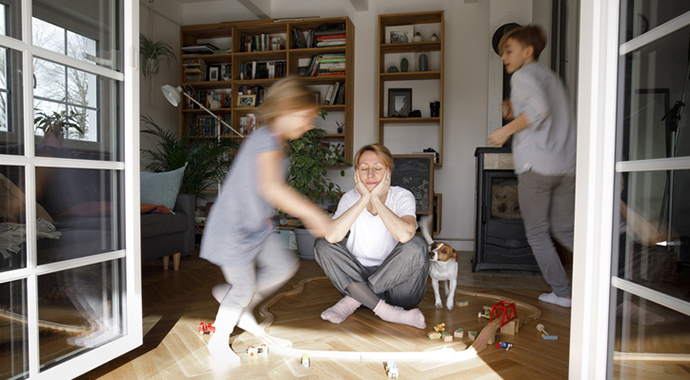
Conflicts are inevitable, but we can learn to respond to them in new ways. The simple mindfulness self-regulation technique “STOP” helps us slow down, regain control of our emotions, and maintain calm even in the most tense situations.
Often, it all happens very quickly. Just a few careless words, a raised voice, a little pressure—and suddenly we’re defending or attacking. We’re defending. We’re fighting. Cortisol levels are elevated, blood vessels are constricted, and we’re in the grip of the stress response .
In the evening or the next day, we’ll ponder how we should have acted or responded. But that’s all later. In hindsight. Right now, the conflict consumes us and drains all our energy.
SET ALARM CLOCKS
The problem is that when we’re stressed, we forget the promises we made to ourselves yesterday. In a moment of conflict, we’re too preoccupied with what’s happening, so we need to prepare in advance.
If we see that certain circumstances repeatedly lead us to ineffective behavior in conflicts, we need to set “alarms” for ourselves in advance. This means mentally rehearsing the onset of a difficult situation in a calm state.
A rough outline: as soon as I hear “it” (trigger words) or feel “it” within myself (a rise in arousal, aggression, a desire to argue and attack), I remember my desire to remain calm. We repeat this to ourselves until the intention is literally imprinted in our consciousness. We need to remember, this is the first step of mindfulness in action, without which all other steps are impossible.
“STOP” – A POCKET MINDFULNESS SELF-REGULATION TECHNIQUE
Mindfulness practice offers us various tools for self-regulation, including “pocket” ones. These are accessible methods that are always with us. We can use them at any time, wherever we are. It’s as if they were in our pocket. So, the pocket technique “STOP”—4 letters, 4 steps.
“C” – I feel my feet
As soon as the alarm goes off, we need to connect with our bodies to prevent the immediate, automatic stress response. We might respond harshly, attack, devalue, raise our voice, or, conversely, withdraw, shut down, or indulge in self-pity. Essentially, we’re talking about our favorite “fight-flight-freeze” reactions.
Why is the connection with the body so important to us? Here are two reasons:
- The body is always in the present moment, which is how mindfulness works. It’s “now” that a choice arises: to follow a habitual reaction or to act differently. We need an alarm clock to ensure we don’t miss the opportunity to make this choice.
- Contact with the body activates the parasympathetic nervous system, which is responsible for inhibition and relaxation.
In this technique, to connect with the body, we shift our attention to our feet. We feel them from the inside. The temperature. The contact with the floor. This is the first and very important step.
“T” – I’m scanning the body
Once we feel support in our feet, we shift our attention inward—this is the second step. We begin to sense our arms, legs, back, chest, and notice our breathing. We scan our body from within with gentle attention, connecting with specific sensations within. We don’t think about the body; we sense it. We rely on it in difficult situations to avoid making mistakes.
It’s important to remember that we do all this within the context of a nascent conflict situation, so we keep part of our attention on the conversation and transfer the other part of our attention to our body. This is a skill. You’ll get better at it with practice.
“O” – I postpone the reaction
The third step is the moment of choice. Relying on our body gives us the strength not to fall into a habitual pattern of behavior, but simply to postpone it for a while. Yes, postpone. We don’t suppress the reaction. We don’t judge ourselves or tell ourselves that we shouldn’t behave this way. “Okay, right now I want to say these harsh words. Fine, no problem. I’ll just say it a little later. In 15 minutes. In an hour. Tomorrow.” You decide the time.
This is the moment of truth
If we manage to buy ourselves some time, our state will likely change, and the intensity of negative emotions will diminish. Our state almost always changes; we just need a break.
When you do all this in the midst of a heated conversation, taking a few minutes to pause is a real victory. Sometimes, even a few seconds can make all the difference.
“P” – I support myself
Often, stress reactions are so intense that postponing unwanted behavior seems very difficult, so tempting is the desire to react immediately. And for this, we need this fourth step.
We ask ourselves, “How can I support myself right now to delay this reaction for a while?” And an answer emerges within. Perhaps it’s drinking a glass of water. Or a cup of tea. Or going outside for five minutes to breathe. Some answers will definitely come; we just need to give ourselves the opportunity. It’s support that helps us cope with the high intensity of the automatic reaction.
Sometimes, during a conflict, it seems impossible to go out for coffee or outside. The response comes in proportion to the situation. Sometimes we can support ourselves simply by taking three to five deep breaths. Or just by going to the window for a couple of minutes. With a little practice, everything will work out.
“STOP” is a simple and effective technique. Like all similar tools, it works if you practice it. It’s best to practice “STOP” in calm or at least not overly stressful situations, gradually increasing the intensity.
3-WEEK TRAINING SCHEME
Week one
Twice a day, six days a week, we practice in a calm state, away from any communication. We practice with ourselves. We direct our attention through the suggested steps, letter by letter.
We put aside current reactions, not necessarily stressful ones, for a while. We support ourselves now. We don’t have to support ourselves only when we’re feeling down. We find our own taste in this exercise.
Week two
We continue to train once a day, six days a week, in a calm state. Alone, away from social interaction.
And once a day, six days a week, we practice applying it in situations of communication and interaction, perhaps with a slight degree of tension.
After each incident, we think about what worked and what we’ll do differently next time.
Week three
We practice this practice once or twice a day, six days a week, during communication and interaction. We try it in tense situations, alternating with approaches in calmer situations. We analyze the results.
Gradually, step by step, you will feel how your own style of working with this technique is emerging.
I wish you strength and patience! May “STOP” bring peace and support into your life.