Parenting comes with a lot of joy and happiness and often raises a lot of questions as well. It’s a time of watching a child move from a mere utterance of words to a complex emotional life as they navigate their teenage years and beyond. But when these changes become worrisome or when a child becomes stagnant and struggling and difficult for the parent to comprehend and cope with, this where child and adolescent psychology steps into the picture and provides a light of hope to these struggling parents and children as they navigate the complex world of a young life and a young mind.
In this highly informative resource, we will venture into the fascinating world of child and adolescent psychology to explore what it really means and clarify the possible symptoms that could require professional help. We will also delve into the enormous fields that child psychology encompasses and the immeasurable advantages of consulting a child psychologist.
What is Child Psychology?
Essentially, child psychology is an area within psychology as a whole. Child psychology is the study of the mind or the behavior of children. It is the study of the different stages in the life span of children. In a more general manner, it can be said to involve the life span from birth through the teenage years. So, it is the study through which we understand the manner in which children view the world or the manner in which they feel.
This specialized knowledge goes beyond pointing out what’s wrong with the child; it also entails knowledge of typical development. Child psychologists are knowledgeable about what is deemed “normal” for various ages regarding when a child normally begins talking, walking, expressing empathy for others, or comprehending complex rules. This knowledge empowers them to determine if the child is jeopardizing typical patterns of development or if behaviors, thoughts, and feelings are becoming issues.
Child psychology studies ways in which different factors impact the development of a child, which include:
- Biological factors: Genetics, brain development, physical health.
- Environmental factors: Family dynamics, school experiences, peer relationships, cultural influences, socio-economic status.
- Social factors: Interactions with others, learning social norms.
- Cognitive factors: How children think, learn, and problem-solve.
- Emotional factors: How children feel, express emotions, and regulate them.
The aim would be not only to diagnose and treat mental health problems in children and adolescents but also to enhance mental wellness and development in order for them to reach their fullest potential. It would be more about having a tool and guideline in terms of supporting children in navigating the challenges of life.
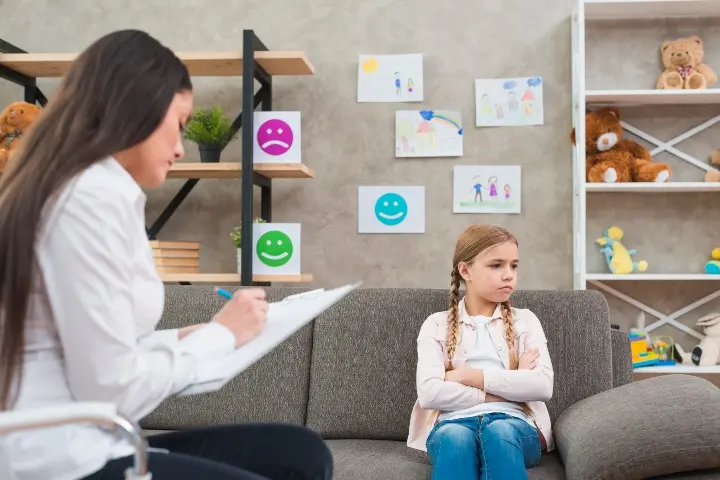
When is it Time to Call a Child Psychologist?
One of the things that parents are always concerned about is the question of how to determine if one’s child requires professional intervention or it’s just a phase. Children do have various phases. There are certain scenarios and indicators that indicate taking the advice of a child psychologist might prove to be a huge advantage in preventing a problem from escalating. It’s always a good idea to follow one’s intuition as a parent. If something seems odd or if a particular problem lingers, it’s a good idea to investigate the matter.
Here are some detailed situations and indicators that might suggest it’s time to seek the expertise of a child psychologist:
- Persistent Behavioral Issues:
- Extreme Tantrums or Defiance: While tantrums are normal for toddlers, unusually intense, frequent, or prolonged tantrums beyond what’s typical for their age, or chronic defiance (refusing to follow rules, arguing constantly) might signal underlying issues.
- Aggression: Regularly hitting, biting, kicking, destroying property, or cruelty to animals or others.
- Self-Harm: Any form of self-injury, such as cutting, hitting oneself, or burning. This is a serious red flag requiring immediate attention.
- Significant Changes in Sleep or Eating Patterns: Persistent difficulties falling asleep or staying asleep, frequent nightmares, sudden refusal to eat, extreme picky eating leading to nutritional concerns, or signs of an eating disorder (e.g., obsession with weight, body image).
- Regressive Behaviors: Reverting to earlier behaviors, like bedwetting after being toilet-trained, thumb-sucking, or clinging, especially after a stressful event, and if these behaviors persist.
- Emotional Difficulties:
- Persistent Sadness or Irritability: If your child seems sad, withdrawn, or irritable most of the time, loses interest in activities they once enjoyed, or frequently cries without an apparent reason.
- Excessive Worry or Anxiety: Constant worry about future events, school, social situations, or safety. Physical symptoms like stomach aches or headaches with no medical explanation, panic attacks, or extreme separation anxiety.
- Extreme Mood Swings: Rapid and dramatic shifts in mood that are out of proportion to the situation.
- Low Self-Esteem: Negative self-talk, feeling worthless, hopeless, or excessively self-critical.
- Difficulty Expressing Emotions: Struggling to identify or talk about feelings, or bottling them up.
- Social Challenges:
- Difficulty Making or Keeping Friends: Persistent loneliness, being frequently excluded, or struggling with social cues.
- Social Withdrawal: A sudden or ongoing reluctance to engage with peers or participate in social activities, preferring isolation.
- Bullying: Either being consistently bullied by others or engaging in bullying behavior themselves. Both scenarios require intervention.
- Poor Social Skills: Struggling with sharing, taking turns, understanding others’ perspectives, or resolving conflicts appropriately.
- Academic Problems:
- Sudden Drop in Grades: A noticeable and unexplained decline in school performance.
- School Refusal: Persistent and intense reluctance or refusal to attend school, often accompanied by physical complaints.
- Difficulty Concentrating or Focusing: Persistent problems with attention, impulsivity, or hyperactivity that significantly impact learning.
- Undiagnosed Learning Difficulties: Despite effort, the child struggles significantly with reading, writing, or math.
- Trauma or Major Life Changes:
- Grief and Loss: Struggling to cope with the death of a loved one (person or pet), parental divorce, or separation.
- Traumatic Experiences: Witnessing or experiencing abuse, neglect, a natural disaster, an accident, or violence. Symptoms might include nightmares, flashbacks, extreme fear, or changes in behavior.
- Major Transitions: Difficulty adjusting to a new school, moving to a new city, or the arrival of a new sibling.
- Unexplained Physical Symptoms:
- Frequent stomach aches, headaches, nausea, or other physical complaints for which a medical doctor finds no physical cause. These can often be manifestations of stress or anxiety.
- When Parents Feel Overwhelmed or Stuck:
- If you’ve tried various approaches and parenting strategies, but nothing seems to work, or if you feel consistently overwhelmed, frustrated, or helpless in managing your child’s behavior or emotional state. Seeking support is a sign of strength, not failure.
It is essential to remember that early intervention is often better. It becomes simpler to address any issues early, rather than letting them escalate to more difficult levels to be remedied. A child psychologist is able to shed light on what you need to do, as well as ways and means to address your child’s needs.
What Areas Does Child and Adolescent Psychology Cover?
Child and adolescent psychology is a rather wide field that encompasses almost every side of development and growth of a child. It is not merely about dealing with mental health disorders but also encompasses understanding and fostering the intricate mix and match of different aspects of growth and development. Below is an insight into what it actually encompasses:
- Cognitive Development:
- This area focuses on how children think, learn, process information, remember, solve problems, and understand the world around them. It examines the development of attention, memory, perception, language, reasoning, and creativity.
- Examples: How a toddler learns object permanence, how a school-aged child develops logical thinking, or how an adolescent engages in abstract thought and critical thinking. Psychologists might assess for learning disabilities, attention-deficit/hyperactivity disorder (ADHD), or cognitive delays.
- Emotional Development:
- This involves understanding how children identify, express, and manage their feelings. It covers the development of emotional regulation (the ability to control one’s emotional responses), empathy (understanding others’ feelings), self-awareness, and emotional resilience.
- Examples: A child learning to soothe themselves when upset, developing empathy for a crying friend, or an adolescent managing frustration or sadness appropriately. This area addresses conditions like anxiety disorders, depression, mood disorders, and anger management issues.
- Social Development:
- This explores how children interact with others, form relationships, understand social rules, and develop a sense of self within a social context. It includes the development of social skills, friendships, family relationships, and understanding societal norms.
- Examples: A preschooler learning to share toys, a school-aged child navigating peer groups and friendships, or an adolescent developing a sense of identity separate from their family. Conditions like Autism Spectrum Disorder (ASD), social anxiety, and conduct disorders often involve challenges in social development.
- Language Development:
- This area focuses on how children acquire and use language, both spoken and written. It covers everything from babbling and first words to complex sentence structures, vocabulary acquisition, and communication skills.
- Examples: A baby learning to associate sounds with meaning, a toddler forming simple sentences, or a school-aged child developing sophisticated conversational skills. Psychologists may work with speech-language pathologists to address speech delays, language disorders, or communication difficulties.
- Physical/Motor Development (and its psychological impact):
- While primarily a domain of pediatricians, child psychology considers how physical growth (e.g., brain development, fine and gross motor skills, puberty) impacts psychological well-being and behavior. A child’s physical health can significantly influence their mental health and vice-versa.
- Examples: How challenges with motor coordination might affect a child’s self-esteem or participation in sports, or how early or late puberty might impact an adolescent’s body image and social interactions.
- Moral Development:
- This refers to how children develop a sense of right and wrong, fairness, and ethical reasoning. It explores how they internalize societal rules and develop their own moral compass.
- Examples: A child understanding why lying is wrong, or an adolescent grappling with complex ethical dilemmas.
- Personality Development:
- This area investigates how a child’s unique collection of enduring traits, characteristics, and behavioral patterns emerge over time, forming their individual personality. It explores temperament, self-concept, and identity formation.
- Examples: A child’s inherent shyness or outgoing nature, or an adolescent exploring different roles and values to form their adult identity.
- Contextual and Environmental Factors:
- Child psychologists understand that a child doesn’t develop in a vacuum. They consider the influence of the child’s environment, including:
- Family dynamics: Parenting styles, sibling relationships, family conflicts, divorce, attachment styles.
- School environment: Teacher-student relationships, peer pressure, academic performance, bullying.
- Cultural factors: Societal values, cultural norms, ethnic identity.
- Socio-economic status: Access to resources, stress levels within the family.
- Trauma and Adverse Childhood Experiences (ACEs): Abuse, neglect, household dysfunction, community violence.
- Child psychologists understand that a child doesn’t develop in a vacuum. They consider the influence of the child’s environment, including:
- Mental Health Disorders in Childhood and Adolescence:
- A significant part of the field involves the diagnosis, assessment, and treatment of various mental health conditions that manifest uniquely in young people. These include:
- Anxiety Disorders: Generalized anxiety, social anxiety, separation anxiety, panic disorder, phobias.
- Mood Disorders: Depression (often appearing as irritability in children), Bipolar Disorder.
- Neurodevelopmental Disorders: ADHD, Autism Spectrum Disorder, Intellectual Disability, Learning Disorders.
- Disruptive, Impulse-Control, and Conduct Disorders: Oppositional Defiant Disorder (ODD), Conduct Disorder.
- Eating Disorders: Anorexia Nervosa, Bulimia Nervosa, Avoidant/Restrictive Food Intake Disorder (ARFID).
- Trauma-Related Disorders: Post-Traumatic Stress Disorder (PTSD), Attachment Disorders.
- Obsessive-Compulsive Disorder (OCD) and related disorders.
- A significant part of the field involves the diagnosis, assessment, and treatment of various mental health conditions that manifest uniquely in young people. These include:
Thus, by dealing with these broad and interconnected topics, child and adolescent psychology offers a holistic approach to understanding and nurturing the development and well-being of young person during his/her formative years.
Advantages of Consulting a Child Psychologist
Seeking the services of a child psychologist is for more than just dealing with a problematic child but is a preventive measure for instilling emotional well-being in a child. It is important to acknowledge that its advantages not only reach the child but benefit the parents, family, as well as the entire community. This article seeks to explore the advantages of seeking the services of a child psychologist:
For the Child:
- Improved Emotional Regulation and Coping Skills:
- Children learn healthy ways to identify, understand, and manage their strong emotions (anger, sadness, anxiety). They develop strategies to cope with stress, frustration, and disappointment rather than resorting to outbursts or withdrawing.
- Example: A child who used to have frequent meltdowns learns to recognize the early signs of anger and uses deep breathing or a “calm down corner” to regulate their emotions.
- Better Understanding and Expression of Feelings:
- Psychologists provide a safe space for children to explore their thoughts and feelings without judgment. They help children develop a “feelings vocabulary” and learn to communicate their internal experiences effectively.
- Example: A shy child who struggled to voice their worries learns to articulate their fears about school, leading to a discussion with teachers and solutions.
- Enhanced Social Skills and Relationships:
- Children learn how to initiate conversations, share, take turns, resolve conflicts, understand social cues, and build healthy friendships. This can significantly reduce social anxiety and isolation.
- Example: A child struggling to make friends learns strategies for joining group play and initiating positive interactions, leading to new friendships.
- Increased Self-Esteem and Confidence:
- Therapy helps children recognize their strengths, develop a more positive self-image, and overcome feelings of inadequacy or self-doubt. They learn to believe in themselves and their abilities.
- Example: A child who constantly felt “not good enough” begins to acknowledge their talents and efforts, leading to a boost in their self-confidence in various areas.
- Academic Improvement:
- By addressing underlying issues like anxiety, ADHD, learning difficulties, or emotional distress, therapy can remove barriers to learning and help children focus better, improve concentration, and engage more effectively in school.
- Example: A child with undiagnosed ADHD receives strategies for improving focus and organization, leading to better grades and reduced frustration with schoolwork.
- Development of Healthy Coping Mechanisms for Stress and Trauma:
- For children who have experienced trauma, loss, or significant stress, therapy provides tools to process these experiences, reduce their impact, and develop resilient coping strategies, preventing long-term psychological harm.
- Example: A child who experienced a parental divorce learns to process their grief and anger in constructive ways, preventing these strong emotions from affecting their daily functioning.
- Diagnosis and Treatment of Mental Health Conditions:
- Child psychologists are trained to accurately diagnose conditions like anxiety disorders, depression, ADHD, Autism Spectrum Disorder, ODD, and eating disorders. They then develop tailored treatment plans using evidence-based therapies.
- Example: A child exhibiting persistent sadness and withdrawal is diagnosed with childhood depression and begins talk therapy and behavioral interventions, leading to an improvement in mood and engagement.
- A Safe, Confidential Space:
- For children and adolescents, having a neutral, non-judgmental adult to talk to can be incredibly valuable, especially if they feel unable to discuss certain topics with family or friends.
For the Parents/Family:
- Understanding the Child’s Behavior and Needs:
- Psychologists help parents gain insights into why their child is behaving a certain way, what might be underlying their struggles, and what their specific developmental or emotional needs are. This reduces confusion and frustration.
- Example: Parents struggling with their teenager’s constant defiance learn that it might be a phase of identity-seeking and testing boundaries, rather than purely intentional disrespect.
- Learning Effective Parenting Strategies and Communication Techniques:
- Therapy often involves parent coaching, where parents learn specific, evidence-based strategies for managing challenging behaviors, improving communication, setting boundaries, and fostering a positive family environment.
- Example: Parents with a child prone to explosive outbursts learn to implement consistent consequences, use positive reinforcement, and de-escalate conflicts more effectively.
- Reducing Parental Stress and Guilt:
- Dealing with a struggling child can be incredibly stressful and isolating. A psychologist provides support, validates parental efforts, and helps alleviate feelings of guilt or inadequacy, reminding parents they’re not alone.
- Example: A mother who felt she was “failing” her child by not being able to solve their anxiety problems finds relief in learning that it’s a complex issue requiring professional expertise.
- Improving Family Dynamics and Communication:
- When one child struggles, it often impacts the entire family system. Therapy can help improve communication patterns, reduce conflict, and strengthen family bonds.
- Example: Family therapy sessions help siblings understand each other’s perspectives better, leading to fewer arguments and a more harmonious home environment.
- Support and Guidance During Challenging Times:
- Whether facing a divorce, a chronic illness, a major move, or other family stressors, a psychologist can provide a stable source of support and guidance for the whole family, helping them navigate transitions smoothly.
- Example: During a difficult divorce, a psychologist helps parents co-parent more effectively, focusing on the children’s needs and reducing their exposure to conflict.
- Early Intervention Preventing Future, More Severe Problems:
- Addressing issues early on means they are often easier to resolve. Early intervention can prevent minor difficulties from escalating into more serious mental health problems in adolescence or adulthood.
- Example: A child showing early signs of social anxiety receives support in elementary school, which prevents them from developing severe social phobia in high school.
- Advocacy and Collaboration:
- Child psychologists can act as advocates for children in school settings, working with educators to implement accommodations or personalized learning plans. They can also connect families with other essential resources.
At the end of the day, having your child see a child psychologist is investing in your child. This is the gift that will help your child survive and even live to the fullest the different challenges posed to him or her as they go through life. This investment will help your child become confident and less alone in the world.
Conclusion
Child and adolescent psychology represents a crucial resource for children and young people as well as their families. It provides expert advice on navigating, comprehending, and dealing with challenges faced by children and young people. The tasks children and young people have to accomplish between the ages of five and eighteen are remarkable and constitute a major achievement. Nevertheless, challenges often arise in the lives of children or young people.
Whether it’s the interpretation of complex behaviors or the cultivation of emotional intelligence as well as assisting in developing positive relationships in children, child psychologists have the unique ability to shed light on the complex world of children’s minds. Identifying what the indicators are to seek professional help is the first act of courage on the part of the parents.
The engagement with a child psychologist brings with it a plethora of benefits, from empowering the child with essential life-skills and fostering resilience, to improved academic performance and a healthy sense of self-worth. Clarity, strategies, and most of all the peace of mind that comes with knowing that one is giving the best to help the child make their way are specific milestones that it could bring to the parents.
Keep in mind that seeking help for your child is actually proof of your love and commitment-a proactive decision that will provide the foundation for a healthier, happier, more fulfilling future. If you have concerns about your child’s development, behavior, or emotional status, please don’t hesitate to seek an experienced child psychologist. Quite possibly, it may be one of the most crucial steps you take toward their journey.