Christmas is one of the most well-known and popular celebrated events around the globe. Even if a person does not believe in a particular holiday, they take part in one of its events. But have you ever wondered about the reasons behind all of the events that take place? The reasons behind all of the feelings that occur in December?
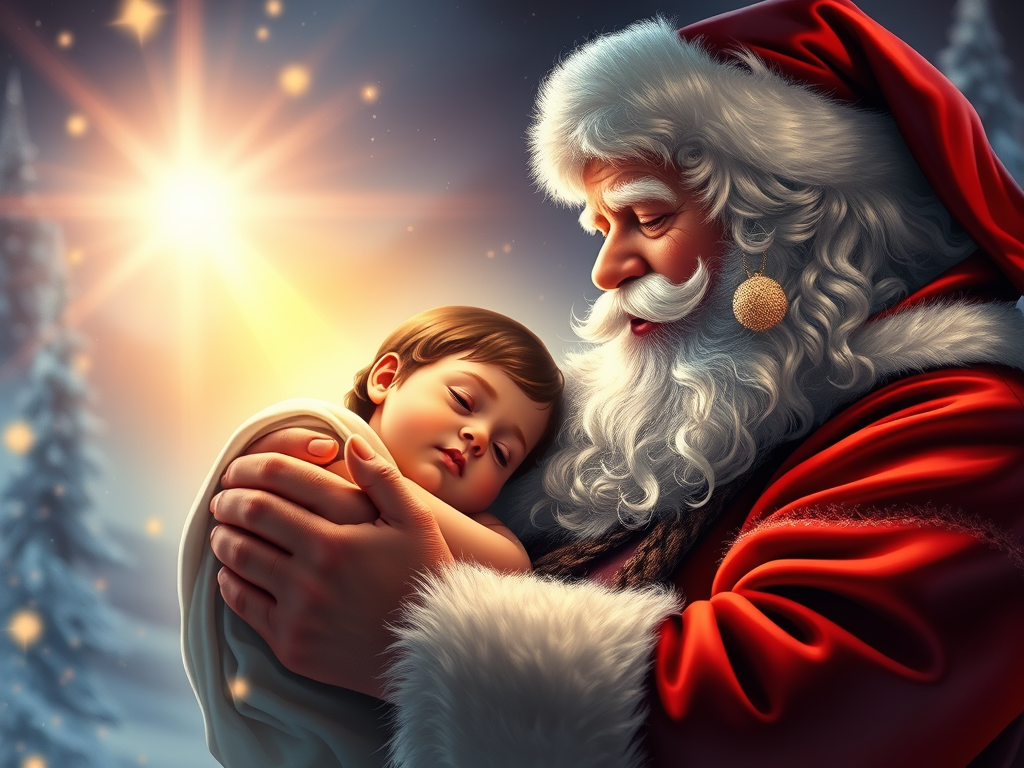
However, at the center of Christmas lies an intriguing contradiction. On the one hand, we have the story of Baby Jesus—the religious icon of humility, faith, and hope. On the other hand, we also have Santa Claus—the secular (non-religious) icon of magic, merit, and material presents.
In today’s blog post, we are going to delve deep into the psychology of Christmas. We will examine how these two characters influence our minds and our society. In today’s world, understanding why and how things influence us enables us to understand ourselves and our customs in a much clearer manner.
1. The Archetype of Baby Jesus: The Psychology of Hope and Humility
To understand the psychology of Baby Jesus, we have to look at what a “baby” represents in the human mind. In psychology, archetypes are universal patterns of symbols or images. A baby is the ultimate symbol of new beginnings and potential.
The Power of the Underdog
The story of Jesus begins in a stable, not a palace. From a psychological perspective, this is a powerful “underdog” story. It tells our brains that greatness can come from the humblest places. This provides a sense of comfort to people who feel small or unimportant in their daily lives. It suggests that every individual has value, regardless of their status.
The Focus on Vulnerability
Usually, we think of leaders or gods as powerful and strong. However, a baby is the most vulnerable thing in the world. By focusing on a baby, the Christmas story encourages empathy and compassion. It asks us to “soften” our hearts. Psychologically, this shifts our focus from our own ego and problems to the needs of someone smaller and weaker.
Faith and the Unseen
For believers, Baby Jesus represents the “Word made flesh.” Psychologically, this is about making abstract ideas (like love or peace) feel real. It is easier for the human brain to connect with a person than with a vague concept. By centering the holiday on a child, the religious tradition creates an emotional anchor that feels personal and intimate.
2. The Archetype of Santa Claus: Magic, Wonder, and Social Control
Santa Claus is a very different figure. While Jesus represents the spiritual side of the holiday, Santa represents the enchanted or magical side.
The Magic of Childhood (Magical Thinking)
Between the ages of 3 and 7, children go through a stage called “magical thinking.” This is a period where they believe their thoughts can affect the world and that anything is possible. Santa Claus fits perfectly into this psychological stage. He flies, he fits down chimneys, and he knows everything.
This magic serves a purpose: it fosters creativity and imagination. It allows children to experience “wonder,” a powerful emotion that makes life feel special and full of mystery.
The “Naughty or Nice” List: Social Conditioning
From a psychological standpoint, Santa Claus is also a tool for “social control.” Think about the song: “He knows if you’ve been bad or good, so be good for goodness’ sake!”
This is a classic example of Operant Conditioning. Parents use the idea of Santa to encourage good behavior. The reward (presents) is tied to following the rules. This teaches children at a young age that society has expectations and that there are consequences for their actions.
The Universal Provider
Santa is the “Father Christmas” figure who provides for everyone. Psychologically, he represents the hope that our needs and wants will be met by a benevolent (kind) force. He is a symbol of abundance and generosity.
3. The Tug-of-War: Materialism vs. Spirituality
One of the biggest psychological conflicts during Christmas is the battle between the “Manger” and the “Mall.” This is the tension between the spiritual meaning of Baby Jesus and the consumerist side of Santa Claus.
Cognitive Dissonance
Many people experience cognitive dissonance during Christmas. This is the mental discomfort we feel when we hold two conflicting beliefs. We believe Christmas should be about “peace on earth” and “love” (the Jesus side), but we also feel an intense pressure to buy the most expensive electronics and toys (the Santa side).
This conflict can lead to stress. We want to be “holy” or “good,” but we also want to be “successful” by giving great gifts.
The Hedonic Treadmill
Santa Claus is often associated with the “getting” of things. In psychology, there is a concept called the Hedonic Treadmill. This is the idea that when we get something new (like a new phone for Christmas), we feel happy for a short time, but then we quickly return to our previous level of happiness.
The story of Jesus attempts to counter this by focusing on “eternal” values rather than temporary ones. The psychology of the season is a constant back-and-forth between the temporary joy of a new toy and the long-term peace of spiritual connection.
4. Why We Need Rituals: The Stability of Tradition
Whether you focus on the religious or the secular side, both involve rituals. Putting up a tree, going to midnight mass, or hanging stockings are all repetitive actions. Why does our brain love these?
Predictability in a Chaotic World
Life is often unpredictable and scary. Rituals provide a sense of structure and safety. When we do the same thing every December, it tells our brain that the world is okay and that time is moving forward in a meaningful way.
Temporal Landmarks
Psychologists call holidays “temporal landmarks.” They are like “mile markers” on the highway of life. They help us organize our memories. We don’t remember every Tuesday in March, but we remember “the Christmas when it snowed” or “the Christmas we stayed at Grandma’s.” These landmarks help us build a story of our lives.
5. The Role of Nostalgia: A Bridge to the Past
Nostalgia is a very powerful psychological force during Christmas. Nostalgia is a sentimental longing for the past.
Connecting with Our “Child Self”
Both Baby Jesus and Santa Claus take us back to our childhood. For many, the icons of Christmas act as a bridge. When an adult sees a crèche (nativity scene) or a red suit, they are transported back to a time when they felt protected and cared for.
Social Bonding
Nostalgia isn’t just about the past; it’s about connection. When we share traditions with our children, we are “handing down” our own childhood experiences. This creates a psychological “chain” that connects generations. It gives us a sense of belonging to something bigger than ourselves.
6. The “Christmas Spirit”: Altruism and the Helper’s High
We often hear the phrase “The Christmas Spirit.” In psychology, this is linked to prosocial behavior—actions that help others.
The Helper’s High
During the holidays, people are generally more likely to donate to charity or help a neighbor. When we give, our brains release chemicals like oxytocin (the “cuddle hormone”) and dopamine (the reward chemical). This is known as the “Helper’s High.”
Emulating the Symbols
Psychologically, we try to mimic our heroes.
- By following Baby Jesus, people try to be humble and selfless.
- By following Santa Claus, people try to be generous and joyful. Both figures, though different, lead the human mind toward the same goal: thinking about others instead of just ourselves.
7. The Dark Side of the Holidays: Stress and Loneliness
While Christmas is meant to be happy, the psychology of the season can also be difficult.
The Pressure of Perfection
Social media has made this worse. We see “perfect” families in front of “perfect” trees. This leads to Social Comparison. If our lives don’t look like a Christmas movie, we feel like we are failing. This “unrealistic expectation” is a major cause of anxiety in December.
The “Holiday Blues”
For those who have lost loved ones, the focus on “family” and “togetherness” can highlight their loneliness. The psychological impact of an “empty chair” at the dinner table is much stronger during a holiday than on a normal day.
8. Development: How Our Views Change as We Grow
Our psychological relationship with these two figures changes as we age.
The Childhood Phase (Wonder)
As children, we don’t see the conflict. We love the story of the baby in the manger and we love the man in the red suit. Both represent magic and safety.
The Adolescent Phase (Skepticism)
As we get older, we might reject Santa because we learn the “truth.” We might also question the religious story. This is part of developing an identity. We are trying to figure out what is “real” versus what is just a story.
The Adult Phase (Meaning)
As adults, we often return to these symbols, but for different reasons. We don’t believe Santa is real, but we value the joy he brings to children. We may or may not believe in the divinity of Jesus, but we value the message of peace. We move from literal belief to symbolic appreciation.
9. Finding the Balance: How to Manage the Psychology of Christmas
To have a healthy holiday season, it helps to find a balance between the two figures.
Focus on Values, Not Items
Instead of focusing on the “presents” of Santa, focus on the “generosity” of Santa. Instead of focusing on the “duty” of religion, focus on the “hope” and “humility” of the story. When we focus on the values behind the symbols, our stress levels go down.
Set Realistic Expectations
Understand that no Christmas is perfect. There will be burnt cookies, crying children, and stressful shopping. Acknowledging this helps reduce the psychological pressure to provide a “magical” experience.
Practice Mindfulness
In the middle of the “Santa rush,” take a moment to be still. Whether you pray or just sit in silence, this “manger-like” stillness can reset your nervous system.
Conclusion: Two Figures, One Human Need
The psychology of Christmas is a very complex thing that involves religion, magic, social conventions, and emotions.
“Baby Jesus” speaks to our soul’s desire for meaning, hope, and reminder of the significance of the smallest among us. Santa Claus speaks to our heart’s desire to experience the wonder of celebration and joy of giving.
We do not even have a choice between them. In our minds, they play different yet equally important parts. Both remind us that we could be better than yesterday. Both challenge us to move away from ourselves and start reaching out to our families and communities.
This Christmas season, when you gaze up at the star or listen for the reindeer on the roof, remember that these icons symbolize much more than the myth. They represent the mirror image of the human need for a world with greater kindness and greater peace.
And with an understanding of the psychology involved with the holiday, we can get beyond the stress and the shopping, to the actual ‘spirit’ which exists between the manger and the sleigh.