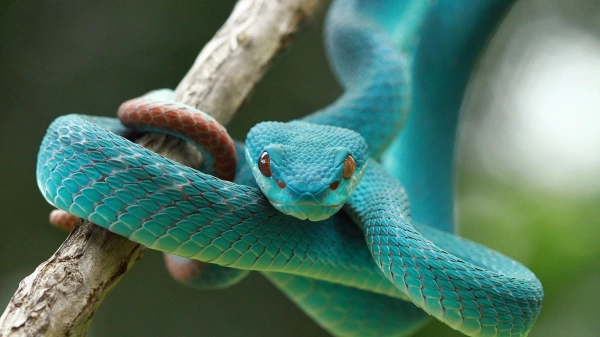
Dreams about snakes are frightening in their vividness and compel us to search for hidden meanings—especially if they are recurring or seem too realistic. We explore why people dream about snakes, how different sources explain such dreams, and what science has to say about them.
The material was commented on by:


Why do I dream about snakes?
Interest in dream interpretation arose long before the advent of psychic science. Even in ancient civilizations, people believed that the gods sent them warnings or advice in dreams, so they attempted to decipher these images and create a “dream language.” The first known collections appeared in Mesopotamia and Ancient Egypt—in them, priests recorded the dreams of rulers and compared them with events in the country [1].
One of the first to attempt a rational approach to dreams was Artemidorus of Daldia, who lived in the second century CE. He wrote the treatise Oneirocritica, a five-volume work in which he examined thousands of subjects, explaining their meaning depending on a person’s gender, age, and social status. Artemidorus believed that dreams were a reflection of life experiences and inner states, although he still associated them with the intervention of higher powers [2]. Artemidorus’s ideas later influenced Byzantine and Arabic authors.
Modern interest in dreams revived in the 19th century with the development of psychoanalysis. In 1900, Sigmund Freud published The Interpretation of Dreams, explaining dreams as manifestations of unconscious desires. Later, Carl Jung proposed viewing dreams as the language of archetypes and the collective unconscious. These theories laid the foundation for the scientific study of dreams, which focused on the connection between dreams and rapid eye movement (REM) sleep [3]. Thus, the history of dream interpretation has evolved from mysticism and religious beliefs to science, but interest in symbols and images remains—now as a way to better understand the human inner world.
“Dreams are a reflection of our unconscious. And they often help reveal hidden experiences, anxieties, fears, or desires,” Olga Smoleva explained. “Dreams can draw our attention to unresolved internal conflicts, to things we may need to reexamine in our lives.”
Snakes have been considered powerful symbols since ancient times—their image appears in almost every culture. In Ancient Egypt, they represented wisdom and immortality; in Greece, they simultaneously represented healing and danger (the Rod of Asclepius is still considered a symbol of medicine); and in biblical texts, they symbolized temptation and evil. In Eastern traditions, the snake could represent vital energy, renewal, or protection [1].
From a psychological perspective, dreams about snakes most often reflect a person’s inner experiences. A snake can symbolize fear, hidden emotions, sexual desire, or inner tension. For example, Freud viewed snakes as a symbol of the male genital organ, meaning dreams about them can be interpreted as intimate experiences in real life. However, it’s important to remember that dreams are highly individual, and their interpretation depends on the context of a particular person’s life, experts warn. Generalized interpretations from dream books can be dangerous and misleading, as they provide universal descriptions, notes Olga Smoleva.
Why do women dream of snakes?
Dreams about snakes often have a particularly strong effect on women, ranging from fear to curiosity. But it’s important to remember that there’s no universal interpretation of such dreams. Dream dictionaries reflect cultural associations and personal experience rather than objective patterns [4], [5], [6].
Alive
Dreams of live snakes are most often associated with difficult-to-control emotions: anxiety, jealousy, hidden anger, or a sense of danger. If a snake slithers nearby, it may reflect inner unrest or a sense of threat in real life. When a snake bites, dream books interpret it as “betrayal,” but psychologists note that such scenes are usually associated with a feeling of vulnerability or past conflict. Sometimes a snake in a dream may appear calm or even beautiful—then it symbolizes energy, sexuality, and intuition. It’s important to understand that the meaning of a dream depends not on the image itself, but on the person’s reaction: if a woman experiences fear, the dream indicates anxiety; if she experiences interest, it indicates a readiness for change, psychologists explain.
Many
When numerous snakes appear in a dream, it is interpreted as a “web of enemies” or “approaching difficulties.” From a psychological perspective, an abundance of snakes can indicate accumulated stress, an overabundance of emotions, or information overload. This is a typical scenario for people who feel pressured by circumstances or fear losing control of a situation.
When many snakes appear in a dream, it is interpreted as a “network of enemies” or “approaching difficulties.”
Snakes in the house
If a woman dreams of a snake crawling into a house, dream books often speak of an “invasion” or “negative energy.” Psychology interprets this more as a reflection of a sense of violated boundaries—emotional or personal. The brain uses the symbol of a house in dreams as a representation of inner space, which is why such dreams are often experienced by people who have difficulty maintaining calm or standing up for themselves in reality.
The snake attacks
An attacking snake in a dream is a typical anxiety dream. It’s not a prediction, but a reflection of emotional stress. Dreams of this type often arise after a conflict, a quarrel, or worry about loved ones. If a snake bites, the brain “plays out” the fear of pain or betrayal that a person may have experienced in reality.
Why do men dream of snakes?
Men perceive dreams about snakes as simultaneously dangerous and attractive. As with women’s dreams, it’s important to remember that, from a psychological perspective, a snake in a dream reflects not external events, but internal experiences related to instincts, anxiety, and self-control [4], [5] [6] .
Live snakes
If a man dreams of a live snake, dream books often warn of a possible threat from an enemy or competitor. Psychology explains such scenes as follows: a snake can symbolize the fear of losing control, jealousy, or aggression that a person is trying to suppress. If the snake in the dream is calm, it may reflect a readiness for change or inner energy that the man has not yet tapped into.
Lots of snakes
Dreaming of multiple snakes is traditionally interpreted as a warning of danger or pressure from circumstances. But in a neuropsychological sense, this dream reflects accumulated stress and internal overload, experts emphasize. The brain creates a “dense” image to visualize the feeling of being surrounded by problems or responsibilities that one cannot escape.
The snake attacks or bites
When a snake attacks, esoteric sources associate it with betrayal, treachery, or the fear of being deceived. In psychoanalysis (according to Freud), a snake bite was interpreted as an expression of repressed aggression or sexual tension [7]. Modern psychologists believe that such a plot speaks of the experience of a threat or internal conflict—for example, when a person feels their principles are being tested.
A snake in the house or in bed
This dream is often encountered by men in a state of anxiety or tense anticipation. Dream books interpret it as “danger nearby” or “negative influence.” Scientifically, it has a different explanation: the brain uses the symbol of a house or bed as a symbol of personal space and vulnerability. When a snake enters a place where a person should feel safe, it reflects a fear of losing control or being caught off guard.
When a snake appears in a dream in a house or in a bed, it is interpreted as “danger nearby” or “negative influence.”
What do snakes mean in dreams: interpretation according to the dream book
People tried to explain dreams about snakes long before the advent of psychology and neuroscience. For some people, they were a symbol of renewal and wisdom, while for others, they were a harbinger of evil and betrayal. This gave rise to numerous dream books. These were based not on facts, but on mythological images, and therefore differ greatly from one another. It’s important to remember that all of these interpretations are unscientific, but they demonstrate how bizarrely different people have endowed the same symbol with different meanings.
Loff’s Dream Book
Loff’s Dream Book is a dream interpretation based on the views of American psychologist David Loff. He believed that dreams have no universal meanings and that their significance depends on a person’s personal experiences, emotions, and life situation. David Loff believed that a snake in a dream reflects inner fears, temptations, and moments of change. If a person is experiencing anxiety, the dream indicates uncertainty and an attempt to avoid danger. When a snake is perceived calmly or arouses interest, it can symbolize a readiness for renewal and growth. Loff’s Dream Book also mentions that a snake in one’s hands is a sign of awareness of one’s strength and intuition [8]
Freud’s Dream Book
The Austrian psychiatrist and founder of psychoanalysis did not write a traditional dream book, but he did create a revolutionary work for its time, “The Interpretation of Dreams,” with a unique approach to interpreting dreams as reflections of unconscious desires. Sigmund Freud viewed snakes as manifestations of sexual energy and repressed desires. An attacking snake represents an internal conflict between desire and fear, while a calm one symbolizes control over passions. A bite in a dream, according to Freud, is associated with feelings of jealousy or anxiety about a relationship [7] .
Vanga’s Dream Book
A popular collection of interpretations attributed to the Bulgarian clairvoyant and folk healer Vanga. She interpreted a snake as a warning of danger or treachery. If you dream of a snake crawling nearby, you should be more careful with those around you; if there are many of them, gossip and ill-wishers are possible. In some cases, the dream can also indicate hidden envy on the part of loved ones [9].
Artemidorus’s Dream Book
Artemidorus was an ancient Greek writer of the 2nd century AD. His work, “Oneirocritica,” is considered one of the first works on dreams and is based on ancient concepts of symbolism and human social roles. In his work, a snake symbolized enemies, illness, or power, depending on who saw it. If the snake attacked in a dream, it foreshadowed danger, while if it behaved peacefully, it could indicate wealth and success. Artemidorus believed that the meaning of a dream depended on the snake’s behavior and the dreamer’s social status [2.
Hasse’s Dream Book
A classic European dream book from the late 19th and early 20th centuries, written by the Polish medium and clairvoyant Miss Hasse. It contains brief and definitive interpretations based on esoteric and occult beliefs. Miss Hasse believed that a snake in a dream foretells treachery, especially from women. If there are many of them, petty quarrels and insincere conversations are to come. Killing a snake signifies overcoming a difficult situation and emerging victorious [10].
Tsvetkov’s Dream Book
Tsvetkov’s Dream Book is a collection of dream interpretations compiled by the Russian astrologer and esotericist Evgeny Tsvetkov in the late 20th century. It draws on folk omens, symbolism, and everyday observations. Evgeny Tsvetkov interpreted dreams about snakes as a reflection of betrayal or hidden conflicts. A crawling snake indicates approaching trouble, while a dead one signifies overcoming difficulties and victory over enemies [11]
Dream Interpretation of Nostradamus
Michel Nostradamus was a 16th-century French physician and astrologer. Nostradamus’s dream book typically divides material into two parts: the meaning of individual symbols and images, and narrative dreams, which are given a more detailed interpretation. Nostradamus associated the image of a snake with secret threats and deception. He wrote that a black snake in a dream signifies great evil, while a snake coiled around a staff signifies a confrontation between good and falsehood. At the same time, killing a snake could signify getting rid of an enemy [12] .
Expert comments
Psychologists emphasize that dreams do not predict the future or carry secret messages, but rather reflect a person’s inner experiences. They reveal anxieties, memories, and emotions that the brain processes during sleep. A snake in a dream is not a sign of fate, but a metaphor for the conditions the dreamer faces in waking life.
Why can dream interpretations be dangerous or misleading?
Some people, relying on generalized interpretations, may perceive dreams as inevitable predictions of the future. This often evokes a feeling of helplessness and places the person in a vulnerable, victimized position, where life “happens,” and where they are not the active author of their own life story, warns Olga Smoleva.
“Universal” interpretations don’t take into account the context of a person’s life or experience, and can therefore confuse and increase anxiety, says Daria Yausheva. “A dream can be correctly interpreted through dialogue with a psychologist, through the associations and feelings evoked by the image. You can draw it out, describe it as a story. And listen to yourself, to what associations it evokes, and what the dream says about you,” advises Daria Yausheva.
Can dreams about snakes be linked to anxiety or stress levels?
If you have unpleasant or recurring dreams, this is a sign of an unresolved internal conflict or chronic stress. Relaxation techniques, dream journaling, and psychotherapy can help, recommends Daria Yausheva.
You can use narrative techniques—write down a dream and rewrite it. Change the ending or introduce characters as you go, and then reread it later.
“It helps if you try to understand what difficulties it’s referring to, what unmet needs. But if the dream is recurring and causes severe anxiety, it’s worth consulting a specialist to figure out what exactly your psyche is trying to communicate,” advises Daria Yausheva.
Should I be concerned if I dream about snakes frequently?
If you frequently dream about snakes, don’t panic, Olga Smoleva reassures. Perhaps you’re experiencing stress or anxiety in real life. You need to address that situation, not your dreams. Or you might be suppressing certain desires and emotions, and it’s worth addressing this with a psychologist.
How to get rid of dreams with snakes?
Don’t deliberately try to get rid of these dreams. Excessive attention and “resistance” can have the opposite effect, increasing the frequency of these dreams and obsessing over them, warns Olga Smoleva. Allow these dreams to occur while simultaneously working on your inner state toward greater relaxation, peace, and calm.
The main thing about what snakes mean in dreams
- The snake is one of the most emotionally charged and ancient images that people have tried to explain for thousands of years.
- Dream interpretations are based on the myths, traditions, and symbols of different cultures, and therefore vary greatly. A snake could signify wisdom, danger, or temptation—it all depended on the era and culture.
- Science does not confirm the prophetic nature of dreams. Dreams are the result of the brain processing emotions, fears, and impressions at night.
- A snake in a dream is often associated with internal feelings. This could be anxiety, tension, repressed aggression, or a sense of threat.
- Emotions in a dream are more important than the plot. A frightening snake may reflect real anxiety, while a calm one may reflect a readiness for change.
- There is no universal meaning. The same image can mean different things to different people—it all depends on personal experience, life context, and attitude toward what is happening in the dream.
- Dreams don’t provide ready-made answers, but they can suggest what you should pay attention to in your own state: fears, unresolved experiences, the need for change.