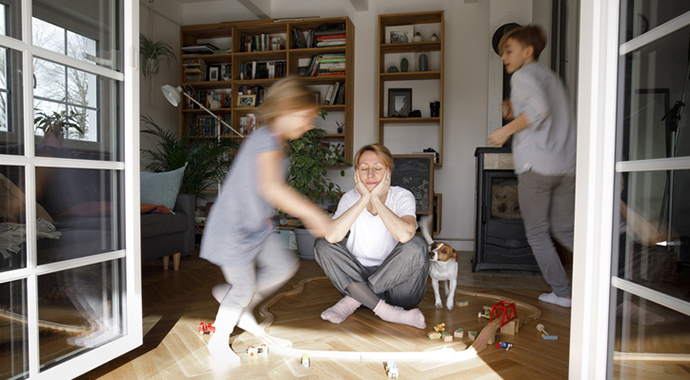
We have all been there. The panic that strikes right before an important presentation. The infuriating traffic jam is sure to leave you late for an important meeting. The bad news that strikes and makes your heart race. Life is full of curveballs, and sometimes these curveballs come at us full force, right to the face. This is when the human body’s natural “fight, flight, or freeze” response is activated. Your heart is racing, your breathing is shallow, and your mind is racing. This was a very important survival technique for our ancestors to have when faced with saber-toothed tigers. However, in today’s world, this technique is activated for things that may not be life-threatening but sure feel like it. And when it does, you need to be able to put on the brakes.
The good news is that you don’t have to be a victim of your stress response. Psychologists have spent years studying how our minds and bodies respond to stress, and they’ve developed simple but incredibly powerful tools that can help you calm down instantly, even in the middle of a stressful situation. These are not magic tricks, but practical tools that can help you take back control of your life.
In this blog post, we’ll show you three extremely effective tools that you can start using immediately to calm down instantly. We’ll break each of these tips into simple steps you can follow, explain how they work in simple terms, and provide examples of how you can apply each of these tips in your life. So, are you ready to give yourself the power to calm down instantly?
Understanding Stress: A Quick Primer
So, before we dive into the tips, let’s take a brief moment to understand what stress does to your body and mind. Understanding this relationship will give you a better sense of how well these tips work.
Think of your nervous system as having two main parts that handle stress:
- The Sympathetic Nervous System (SNS): This is your body’s “accelerator” or “gas pedal.” When you feel threatened or stressed, the SNS kicks into action. It releases stress hormones like adrenaline and cortisol. This makes your heart beat faster, your breathing speed up and become shallow, your muscles tense, your senses become super alert, and blood flow is directed to your major muscles (preparing you to run or fight). Digestion slows down, and you might get that “butterflies” feeling in your stomach. Your brain’s alarm system (the amygdala) goes off, making it harder to think clearly or rationally. This is the “fight, flight, or freeze” response.
- The Parasympathetic Nervous System (PNS): This is your body’s “brake pedal” or “rest and digest” system. Its job is to calm things down after the perceived danger has passed. It slows your heart rate, relaxes your muscles, encourages deeper breathing, and brings your body back to a state of balance.
When stress is your constant companion, your sympathetic nervous system may always be “on,” leaving you exhausted, worried, wired, sleep-deprived, and with a few other stress-related health problems. The fast stress-relieving methods are designed to flip the switch on your parasympathetic nervous system, or tap the brakes while the alarm bells are still ringing. In other words, they help remind your body and mind that everything is okay, and it’s safe to relax, even if the stressful situation itself doesn’t magically go away.
The fast stress-relieving methods do not eliminate stress; they simply change how we react to it. They give us mental and physical space to choose a rational, effective response, rather than a knee-jerk, instinctive one.
Tip 1: The Power of Deep Belly Breathing (Diaphragmatic Breathing)
When we feel stressed or anxious, our breathing sprints forward with rapid, shallow breaths. This means that instead of breathing with our diaphragm, we end up breathing with our chest. This type of breathing doesn’t soothe our brain; it actually tells it that something is wrong and that there is danger ahead. The good news is that we can turn this around with our breathing.
What it is: Deep breathing, also known as diaphragmatic breathing, is when we breathe air down into our stomachs instead of our chests. This is an easy but powerful technique that lets our bodies know that everything is okay.
Why it works (in plain language, free-flow style): “Your diaphragm is a dome-shaped muscle located just below your lungs. When you breathe deeply with your diaphragm, it descends, causing your stomach to bulge slightly. This action stimulates a very important nerve, your Vagus nerve, which is a large part of your parasympathetic nervous system, or your ‘brake pedal.’ When your Vagus nerve is tickled, it sends messages to your brain and body to slow down your heart, lower your blood pressure, and relax your muscles. In other words, it tells your body to calm down.
Shallow breathing, on the other hand, keeps your ‘gas pedal’ constantly engaged. When you consciously breathe with your belly, you’re sending a message to your body to shift gears from ‘fight or flight’ to ‘relax and digest’—a direct line to your body’s calm-down mechanism.”
How to do it (step-by-step):
- Find a comfortable position: You can sit in a chair, stand, or even lie down. If sitting, make sure your back is straight but relaxed, and your feet are flat on the floor.
- Place your hands: Put one hand on your chest and the other hand on your belly, just below your rib cage. This will help you feel where your breath is going.
- Inhale slowly through your nose: Take a deep, slow breath through your nose. As you inhale, focus on expanding your belly. The hand on your belly should rise, while the hand on your chest should remain relatively still. Imagine filling your belly with air like a balloon. Count slowly to 3 or 4 while you do this.
- Hold for a moment (optional): You can briefly hold your breath for a count of 1 or 2, if it feels comfortable.
- Exhale slowly through your mouth: Gently purse your lips as if you’re blowing through a straw. Exhale slowly and completely, letting your belly fall inwards. You might count slowly to 4, 5, or 6 as you exhale, making your exhale longer than your inhale. This longer exhale is particularly effective for activating the calming response.
- Repeat: Continue this cycle for a few minutes (2-5 minutes is ideal, but even 30 seconds can make a difference). Focus all your attention on the feeling of your breath moving in and out, the rise and fall of your belly.
When to use it:
- Before a stressful event: A job interview, a difficult conversation, a doctor’s appointment.
- During a stressful event: When you feel overwhelmed in traffic, during an argument, or if you receive bad news.
- Anytime you feel anxious: When worries start to spiral, or you feel physical tension building.
- As a daily practice, even a few minutes of deep belly breathing each day can improve your overall stress resilience.
You are stuck in a huge traffic jam, already 15 minutes late for work. Your heart beats rapidly in your ears, and your anger, frustration, and irritation are building up. What to do instead of venting: breathe. Put your hand on your belly. Inhale through your nose for a 4-count, feeling your belly rise. Pause. Exhale through your lips, slightly puckered, for a 6-count, feeling your belly fall. Repeat this 5-10 times. Suddenly, your shoulders relax, your hands on the steering wheel ease up, and your thoughts clear.
Tip 2: The 5-4-3-2-1 Grounding Technique
But when life becomes too much—stress, anxiety, a racing mind—the mind can feel like it’s spinning out of control. You feel as though you’re disconnected from the world around you, or as though you’re walking through a fog. It is in these times that having a means to bring your mind back to the present and keep it there becomes crucial. That’s where grounding techniques come in.
The concept is this: the 5-4-3-2-1 exercise is a simple mindfulness tool that uses your five senses to bring you back to the present. Focusing on the physical world around you, it serves as a means to shift your focus away from stressful thoughts or emotions. It’s a literal reset, bringing you back to reality.
What the mind does when it is under stress is to think about what happened in the past or what will happen in the future. The thinking part of the brain, the prefrontal cortex, gets overwhelmed by the emotional part of the brain, the amygdala. This technique works by using the parts of the brain that deal with sensory information. The senses, seeing, touching, hearing, smelling, and tasting, will shift the focus from the internal world to the external world. This shifts the mind away from the source of the stress and provides the emotional part of the brain a break, allowing the thinking part to reset and re-engage.
How to do it (step-by-step):
- Stop and look around: Take a moment to pause whatever you are doing.
- Acknowledge 5 things you can SEE: Look around your environment and quietly (or in your head) name five distinct objects you can see. Don’t just glance; really notice them. For example: “I see the blue pen on my desk, the crack in the wall, the framed picture, the sunlight coming through the window, the dust motes dancing in the air.”
- Acknowledge 4 things you can TOUCH/FEEL: Without necessarily moving, notice four things you can feel. This could be the texture of your clothes, the smooth surface of your desk, the feeling of your feet on the floor, the warmth of your mug, or the sensation of air on your skin. Focus on the actual physical sensation. For example: “I feel the soft fabric of my shirt, the hard chair beneath me, the smooth phone in my hand, the cool air on my face.”
- Acknowledge 3 things you can HEAR: Listen carefully and identify three distinct sounds. This might require you to really tune in and block out other thoughts. For example: “I hear the distant hum of traffic, the ticking of the clock, the sound of my own breathing.”
- Acknowledge 2 things you can SMELL: Take a deeper breath and notice two distinct smells in your environment. If you can’t identify two, try to identify one, or even imagine a pleasant smell. For example: “I smell the faint scent of coffee, the clean smell of paper.”
- Acknowledge 1 thing you can TASTE: Notice one taste in your mouth. This could be the lingering taste of your last meal or drink, or simply the taste in your mouth right now. If you don’t taste anything distinct, you can imagine a favorite taste. For example: “I taste the mint from my toothpaste.”
When to use it:
- When thoughts are racing: If your mind is spiraling with worries or negative predictions.
- During panic attacks or intense anxiety, it helps pull you out of the internal experience.
- Feeling overwhelmed: When there’s just too much going on, and you feel scattered.
- After a traumatic or upsetting event: To help reorient you to safety and the present.
- Feeling disconnected or foggy: To bring clarity and focus back.
Example Situation: You are about to give your presentation, and suddenly your mind goes blank, your heart starts racing, and you feel a surge of panic, which causes your thoughts to scatter.
What to Do: Take a few deep breaths (remember, Tip 1!), and then try to ground yourself with the 5-4-3-2-1 method. Look around: What do I see? The projector screen, the people’s faces, the time, my notes, the exit sign. Touch: What do I feel? The weight of my feet on the ground, the podium, the pen, the watch ticking away. Hear: What do I hear? The air conditioner, someone coughing, and my own breathing. Smell: What do I smell? The cleaning solution is used to clean the room. Taste: What do I taste? The dryness of my mouth. This method will help you break the cycle of panic, allowing you to think clearly again before you begin your presentation.
Tip 3: Quick Physical Shift (Movement or Sensory Shock)
Sometimes, the best way to calm your mind is to first calm your body, or at least interrupt its stress response. Our bodies hold onto stress and tension. When we’re under pressure, we might clench our jaw, hunch our shoulders, tighten our fists, or hold our breath without even realizing it. These physical reactions feed back into our brain, telling it, “Yes, we are definitely in danger!” A quick physical shift can break this cycle.
What it is: This technique involves using a sudden, intentional physical action or a brief, harmless sensory “shock” to your system to quickly interrupt the body’s physical stress response. It’s about physically shaking off the stress or re-engaging your body in a new way.
Why it works (in simple English): When stress hormones like adrenaline are coursing through your body, they’re preparing you for physical action. If you don’t actually do anything physical, that energy gets trapped, leading to jitters, tension, and increased anxiety. Engaging in a quick physical shift helps release some of that trapped energy.
Furthermore, a sudden change in physical state or a mild sensory shock (like cold water) can act as a “reset button” for your nervous system. It’s a jolt that demands your body’s attention in a new, immediate way, diverting it from the internal stress signals. It can stimulate the Vagus nerve (like deep breathing) or simply overwhelm the stress signals with new, powerful sensory input, forcing a temporary physiological shift. It literally tells your body to “snap out of it!”
How to do it (step-by-step options):
There are a few ways to do a quick physical shift:
Option A: Quick Movement Release
- Stand up and stretch: If possible, simply stand up, reach your arms overhead like you’re trying to touch the ceiling, and stretch your body. You can add a yawn if it feels natural.
- Shake it out: Stand up and gently shake your hands, arms, legs, and even your whole body for 10-20 seconds. Imagine you’re shaking off water or tension. This is a natural way animals release stress after a threat.
- Brisk walk (even short): If you can, step away from the stressful situation for 1-2 minutes and take a brisk walk, even if it’s just around the room or to the water cooler. Focus on the rhythm of your steps.
- Tense and release: Tense all the muscles in your body as tightly as you can for 5 seconds (clench fists, tighten jaw, squeeze shoulders up). Then, suddenly and completely relax all those muscles, letting go of the tension. Repeat 2-3 times.
Option B: Sensory “Shock”
- Splash cold water on your face: Go to a sink and quickly splash cold water on your face, especially around your eyes and temples. This instantly activates the “diving reflex,” which slows your heart rate and redirects blood flow, calming your system.
- Hold an ice cube: If splashing water isn’t possible, hold an ice cube in your hand for 30-60 seconds. Focus on the intense cold sensation. This sensory input can be very grounding and distracting from overwhelming thoughts.
- Chew something intense: Grab a strong mint, a piece of spicy gum, or even a sour candy. The intense flavor stimulates your senses and can effectively redirect your focus away from stress.
When to use it:
- Feeling restless or fidgety: When you have a lot of nervous energy.
- Physical tension: When you notice yourself clenching, hunching, or feeling stiff.
- Feeling stuck or overwhelmed in one spot: When you need a physical change of scenery or sensation.
- During intense emotional moments: When you’re on the verge of crying or yelling, a physical shift can help you regain composure.
- When mental techniques aren’t quite cutting it: Sometimes you need a physical intervention.
Example Scenario: You’re sitting at your desk, struggling with a challenging project and a tight deadline. You feel an overwhelming sense of frustration and panic building, making it hard to focus, and your shoulders are hunched up to your ears. Action: You can’t leave for a long walk, but you can stand up. Stand up from your desk, stretch your arms overhead, reach for the ceiling, then gently shake out your hands and arms. Roll your shoulders back a few times. If you have access to a restroom, quickly splash some cold water on your face. Alternatively, grab a strong mint from your drawer and pop it in your mouth, focusing on the intense menthol sensation. This quick physical interruption will help release the trapped tension and reset your focus, allowing you to return to your work with a clearer, calmer mind.
Putting It All Together: Practice and Persistence
These three tips – Deep Belly Breathing, the 5-4-3-2-1 Grounding Technique, and Quick Physical Shifts – are powerful tools individually. But you can also combine them! For example, start with a few deep breaths, then ground yourself with 5-4-3-2-1, and if you still feel physical tension, do a quick shake-out.
The key to mastering these techniques is practice.
- Practice when you’re NOT stressed: Don’t wait until you’re in the middle of a crisis to try these for the first time. Practice deep breathing for a few minutes every day. Try the 5-4-3-2-1 technique when you’re simply waiting in line or sitting on the bus. The more you practice them during calm times, the more natural and effective they will be when stress strikes.
- Be patient with yourself: You might not get it perfectly the first time. That’s okay! The goal isn’t perfection, but progress. Each time you try, you’re building a stronger connection to your inner calm.
- Find what works best for you: While these are generally effective, you might find one technique resonates more with you than another. Experiment and see what provides the quickest relief for your specific stress triggers.
Think of these tips as skills, like riding a bike or playing an instrument. The more you practice, the better you become. Over time, you’ll be able to activate your “calm down” response almost instantly, no matter what challenges life throws your way.
When to Seek Professional Help
While these tips are incredibly effective for managing acute (short-term) stress and anxiety in the moment, it’s important to remember they are not a substitute for professional mental health support.
If you find that:
- Your stress or anxiety is constant and overwhelming.
- These techniques aren’t providing enough relief.
- Your stress is interfering significantly with your daily life, relationships, or work.
- You’re experiencing symptoms like persistent sadness, hopelessness, sleep problems, or changes in appetite.
It might be a good time to reach out to a mental health professional, such as a psychologist, therapist, or counselor. They can help you understand the root causes of your stress, develop personalized coping strategies, and address underlying issues in a supportive and confidential environment. There is no shame in seeking help – it’s a sign of strength and self-care.
Conclusion: Your Inner Strength Awaits
Stress is an unavoidable part of modern life. But being stressed doesn’t mean you have to be controlled by it. By understanding how your body reacts to pressure and equipping yourself with these simple, psychologist-approved techniques, you gain a powerful advantage.
Remember the three pillars of quick calming:
- Deep Belly Breathing: To directly soothe your nervous system and slow things down.
- The 5-4-3-2-1 Grounding Technique: To anchor your mind firmly in the present moment, away from overwhelming thoughts.
- Quick Physical Shift: To release trapped physical tension and hit your body’s reset button.
These tools aren’t just tricks for coping; they are your power in action. They can help you become a resilient person with a clear focus and a thoughtful approach to making choices, even when the heat is on. Start today and discover the tremendous power you have within you to remain calm and steady your mind and body when the going gets tough. Your inner calm is not a distant dream; it is a skill waiting to be developed.